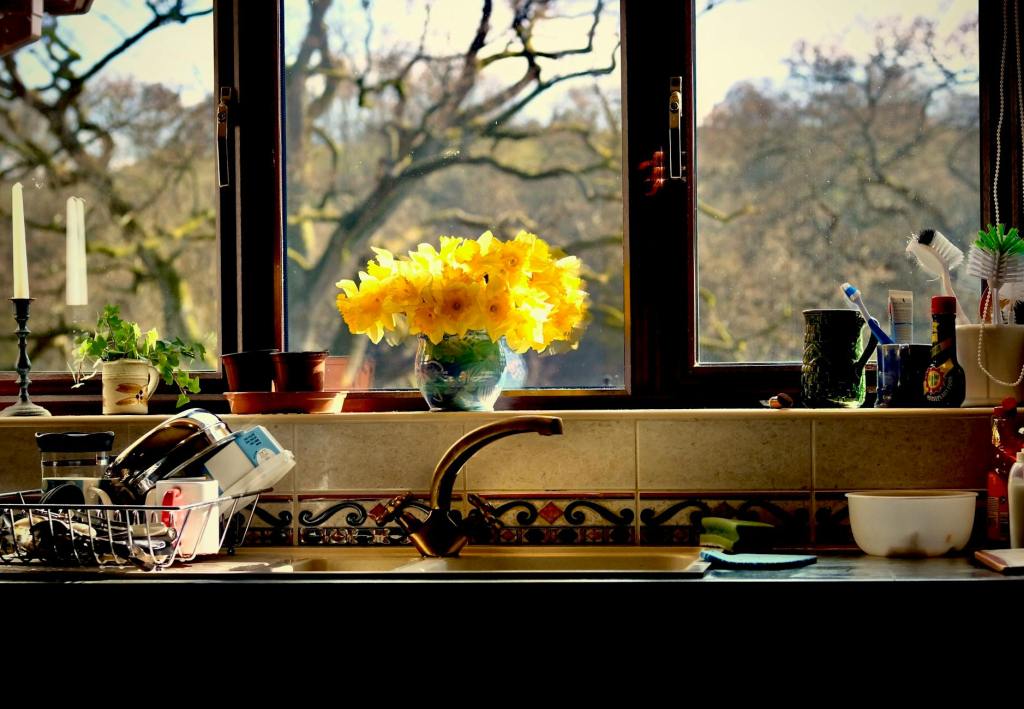
Every attempt to clean the kitchen begins the same way. I reach for the pots in the sink, then look to my right where the drying rack is still full from last night’s culinary chaos. It’s defeating in ways that most busy, unorganized, sleep-deprived, procrastinator-prone people can appreciate. Nothing moves until the rack is cleared.
Yeah, we clean as we go. But at some point sanity and fatigue conspire, and cleaning takes a back seat. In the case of sanity, it is more calculated and deliberate, a choice to spend time with family. In the case of fatigue, it is owing more to a lack of sleep. Not severe, not insomniac, but enough to dull the will to keep up with the two prevailing forms of household chaos: the must-mess and the cumulative-mess, both of which compete aggressively for attention. The drive to keep up evaporates like water on a drying plate, and by five o’clock you are left in that domestic purgatory where even quality time with family requires strength.
Fatigue might be the condition, but logistics are the cure. As we age, rough nights simply become part of the terrain, and we have to design our days around them. This is not about sleep so much as it is about acceptance and strategy. It is about doomsday prepping for those inevitable tough nights, streamlining things so you can enjoy moments of sanity in the face of fatigue. It is about clearing the channels before addressing the heart of the issue. It is about increasing the odds that, even when you are spent, you can still do something small to keep the house safe and running smoothly, and to make sure you have carved out time, however imperfect, for the people you love.
This preparation looks like sorting laundry before washing. It looks like loading the espresso machine the night before, or, in the case of bigger projects, taping baseboards, laying mats, and organizing tools before painting an entire day before the actual painting begins, knowing full well you will not, on that day, reach the heart of the task at all. These acts are scaffolding. Secretarial work. Little acknowledgements that logistics matter.
Last Saturday, I carved an hour out of my day to make a phone call to Rogers, to renegotiate my cell and internet plan. Creating space in my day was the logistics piece. That was the work before the work, an acknowledgment that I would be put on hold for long stretches while someone waited for their computer, which was “slow today for some reason,” to load information, and/or for a higher-ups to get back to that same whomever with answers to my questions. The resulting call was smooth. I was relaxed, patient, and friendly, and bantered with the rep for, yes, nearly forty-five minutes. At the end of it, though, I got a good deal, and order was restored in a small corner of my life.
It is all the same principle: anticipating small blockages and then clearing them for the sake of long term happiness, productivity and peace of mind.
The Egyptians understood this. They dug irrigation ditches long before the flood came, trusting that the Nile would rise and water their crops when the time was right. The same principle applies to every kind of work. In mining, where the promise lies deep and far away, roads must be built before the gold can be reached. Preparation in this way is a form of optimism. A quiet declaration that the day ahead matters, that future work deserves a clean start. When the rack is full, everything clogs. When it is clear, momentum returns.
We all have our versions of the drying rack. Unfinished tasks, cluttered surfaces, half-formed thoughts. On one hand, they are burdens, because the rack never stays empty. As soon as it is cleared, it fills again. Dishes, laundry, inboxes, obligations, a constant flow of dross. But when we create space to address the spaces that lead to backup, the work seems less arduous and more cathartic, rewarding even, micro-investments.
Legs stretched out, laptop on a tray, espresso cup beside me, I sometimes feel like one of those dishes, dripping quietly after the day’s wash. To be useful again, you have to rest. We spend so much time trying to do everything at once, cleaning, cooking, and planning, that we forget the importance of standing still to dry. There is dignity in being the dish, the one who has done their work for the day and now needs time, air, and quiet. Drying is not laziness. It is recovery.
We move between being the dish and the emptier, depending on where we are in the cycle. When we are tired or still dripping from the chaos of the day, we are the dish, resting until we can serve again. When we have the energy to restore order, we become the one who empties the rack. Neither role is superior. They depend on each other. Without the dish, there is no work to do. Without the emptier, there is no renewal. Life moves between these two states, being cared for and taking care, and to live well is to let both exist without guilt or pride.
Both the dish and the emptier live inside us. And the key is compassion between these two selves. When you are the dish, accept being cared for. When you are the emptier, act with calm. No resentment, no rush, no illusion that it is the last time. The cycle is endless, but not meaningless. You will dry. You will be used again. You will be washed. You will rest. And someday, you will empty the rack for someone else.
This is what I keep coming back to: the rack is never a burden unless I forget its purpose. It is a place of transition, not accumulation. The dishes do not resent being there. They simply wait for the next hand that will set them down, then lift them back into use. So I empty the drying rack first. Not because I love chores, but because order clears the channels, and through those channels, and makes the actual work a little more manageable. And life more hopeful.
JM.

 The Boring Cafe